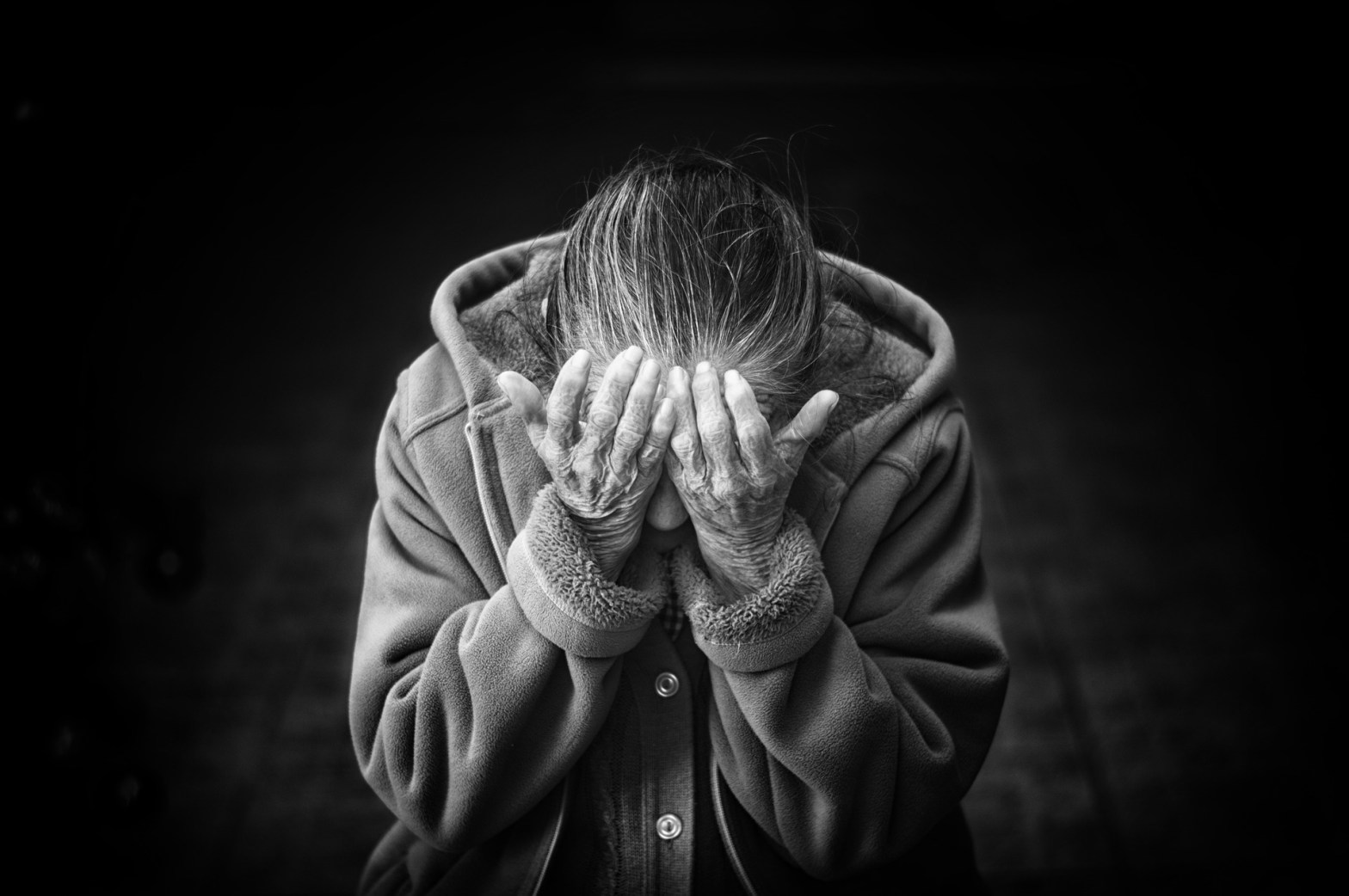
5 Things I Learned from Grief, Applied to COVID-19

“The pain I feel now is the happiness I had before. That’s the deal.” – C.S. Lewis, A Grief Observed

As I look back, I find that the initial 30 years of trial, struggle and challenge experienced in my life were distant to this past year’s struggle after my Dad’s death by suicide. But, I believe it’s the past year that has made all the difference.

The tumultuous journey of grief is unmistakeable to those who have walked it: denial, anger, bargaining, depression, and acceptance. They say there are five stages, all blended into a messy concoction that feels a bit more like uncontrollable chaos.

To be certain, I experienced each of these in due process: days of waking up in disbelief of a painful new reality, being angry that holidays still encumbered societal norms and traditions that I didn’t much feel like celebrating anymore, wondering if I could pray my way into seeing my Dad again (“God, if you just let me talk to him once more, I promise I’ll do everything in my power to be as good as I can and…” the list goes on), considering what my life might turn into if I watched every semi-redeeming Netflix show until the world stopped spinning, and hoping for a day when holidays were sacred and the sun was rightfully-shining once again. These thoughts and feelings didn’t arrange themselves nicely in a particular order, nor did they align themselves with what my environment demanded at the time. Life still goes on. Work still must be done. And holidays still must be celebrated because there’s still much — to my dismay at the time — left to celebrate. This journey, no matter how difficult, changes us as we come out the other side.

Grief denies us ignorance. It ignores our need for normalization. It rips us from our comfort zone and sets us in turbulent, erratic, uncharted waters. And, in my experience, it sets us on a path toward a piece of ourselves that we never would have found otherwise: refines us like a fire until we’re left with only one perspective — a knowledge of what really matters. That’s the acceptance phase, I think.

As we’re all acutely aware, COVID-19 has roared through societies with this same grief-giving fire. It’s closed innumerable businesses. It’s toppled the current structure of school systems and changed student learning. According to a recent Washington Post article, it has amassed havoc on nearly 45% of American’s mental health. And that’s just the start.

The magnitude of “loss” being experienced globally is perhaps unprecedented. But, having come through the fire of incredible, unfathomable loss just over a year ago, I believe there’s something more we must consider when peering at these symptoms of pandemic disease.

After my year of “firsts without Dad” was complete (first birthday, first Father’s Day, first day on the lake, first Eagles concert…), I was left with some takeaways that may not rival the great C.S. Lewis, but give me a peace in the midst of this new, turbulent pandemic storm. A compilation of thoughts, quotes and meanderings that perhaps might bring joy-filled conversation to 2020’s troubles, too.

  1. Deep loss means great love. We’ve all heard this before, in one form or another, but I can’t stress the truth in it enough. As father-time keeps moving the clock forward, I find that I’m increasingly thankful for the good times and less burdened by his loss. Most certainly, we all have lost something in the previous weeks: much-anticipated events, businesses, jobs, structure and normalcy of daily routines and — perhaps most despairingly and importantly — people in our lives. It’s likely a “new normal” will emerge from all this loss (for some, more painfully than others). While the image of our recovery may look variably different than pre-pandemic times, it may perhaps help us reflect on the beauty of those times. Then, wittingly strive to rebuild what we can with a more grateful perspective and heart. As the old adage reminds us, and studies confirm, “Absence makes the heart grow fonder.”
  2. Moments with others matter most. I believe the general American culture (I can’t speak to others, as I haven’t lived in them) has progressively tiptoed toward placing exceeding value on capitalistic, bustling ideology and forgotten the meaning of family dinner, face-to-face conversation, personal relationships and community camaraderie. This is generally speaking, of course, but I believe comes at great expense. After my Dad’s passing, accolades and items became so much less important. It was memories that mattered; moments that can’t be replaced — and will stand the test of time long after houses, lake cabins and businesses are gone.
  3. Be kind. To everyone. What was perhaps my most astounding realization through grief was how many others around me needed kindness and support. As I mentioned in a previous blog post, “[The pain] made me wonder how I had lived in such ignorant bliss with so much brokenness surrounding me. How I had let people pass me by without persistently extending a hand and a heart. It’s not that I had never done so… it’s that I hadn’t done so enough.” For many, it is this pain and loss that rekindle the empathy that’s suppressed by busy lives, menial tasks and monotonous daily routines. There’s nothing like the sharp puncture of loss that reminds us that others are hurting, perhaps in our neighborhoods, workplaces and communities, and need an extending-hand of kindness to dull the pain of unnerving circumstances. COVID-19 has left most of the globe living in unnerving circumstances, and nothing will replace the kindness that you can give — and be — right now.
  4. “Circumstances do not make the man, they reveal him.” – James Allen. As I previously stated, the last 30 years may have made me, but it’s the last year that’s come to define me. Not by accolades, material items or extravagant events. Rather, the overcoming of difficult circumstances and the new calibration to see things as they are — not as I want them to be. I could not save my Dad (as hard as my family and I tried), could not change the outcome, nor rewrite the circumstances that came to be. But, who we choose to be in spite of those circumstances matters. To us individually, our families, our friends and those surrounding us each day. As one of my all-time favorite U.S Presidents, Theodore Roosevelt, said, “Character, in the long run, is the decisive factor in the life of an individual and of nations.” The choices we make through the devastation of COVID-19 will be the foundation we build for a better tomorrow. And it starts with all of us, individually — choices, internal content and character, as we battle through it.
  5. It’s ok not to be ok. It seems our initial response, when asked how we’re doing, is to knee-jerkingly return with some half-concocted version of “I’m great!,” or “Things are going well.” I believe we have been slowly conditioned as a society to think that by acting ok, we escape the tumultuous and unpredictable judgement of another. Or, perhaps the response is to avoid vulnerable connection and deep-rooted relationship, which societal norms have unwittingly de-structured. Perhaps rather than normalizing surface response and connection deterrent, we acknowledge that almost half of the United States (46.4%) will experience a mental illness during their lifetime — and that’s pre-pandemic data. Much of our society hinges on its’ ability to control, conform and conveniently avoid harm-inflicting issues. But what happens in an environment, much like the one COVID-19 has virally crafted, where control, conformity and harm-avoidance seem like a distant memory? How do we avoid the unnecessary mental health casualties of a global pandemic that spans our ability to easily contain? I believe we allow each other not to be ok, and be kind in the midst of it. Difficult circumstances cause us to find ways to adapt and, if all goes well, overcome. During my previous year of incredible grief and difficulty, the most meaningful gift I received was the acceptance of the moments I wasn’t ok. Grief has ways of knocking us off of our feet without notice; let’s be kind to each other’s grief through this time.

Pain. Struggle. Grief. These emotions are felt as a result of unwarranted, uncontrollable and unfathomable circumstances; much like those we are living in now. But, like everything else, these circumstances ebb and flow. The happiness and comfort that was will reemerge, but perhaps in a different form, once again. It’s vital to recognize the pain that is, is a direct result of the happiness that was. The joy, comfort and privilege that existed prior. It’s the vital lessons we learn from it that matter… to reemerge with a reason to celebrate on the other side.

Mental Health: How to Maintain it During a Global Pandemic

For most of us alive today, the concept of a global pandemic is often likened to that chapter titled “1918” in our high school history books… or perhaps Steven King’s novel, “The Stand.” The movie Contagion is probably at top-of-mind, too.

<ENTER COVID-19> It’s unfamiliar. It’s spreading. And, on top of the overwhelming list of unnerving symptoms the virus evokes, it is exponentially increasing panic for those who already battle with mental health disorders of all kinds. Anxiety disorders. OCD. Depression. And more, as 1 in 4 people will be effected by mental and neurological disorders at some point in their lives. Perhaps this unpredictable period in history will be that point.

The hardest part? The viral concern is real, and so is the incredible level of global misinformation spread throughout the internet… which further hinders mental health.

This widespread mental health crisis, now “pandemically-shoved” from terrible to potentially monstrous in this current global climate, should be addressed almost as feverishly as the disease itself.

Fortunately, the CDC has recognized this and recently released a series of ways to cope during COVID-19.  It addresses specific triggers, reactions to watch out for (this includes excessive fear and worry, sleep or eating pattern changes, difficulty sleeping or concentrating, worsening of chronic health problems, or increased use of drugs and alcohol), and ways to support yourself during this historically-precarious season. According to the CDC, mental health support procedures are recommended as follows:

  • Avoid excessive media exposure
  • Practice general self-care — eat well, exercise, sleep well… the basics.
  • Connect with others, within reason, and refrain from isolation (note: social distancing, which has been recommended as a tactic by the WHO as one of the best weapons to combat COVID-19’s spread, means this may look more like technology-based connection).
  • Maintain hope and stay positive

In addition to these rudimentary — but vitally important — steps, if you have an existing mental health condition, you must take the proper steps to ensure you maintain treatment in a modified fashion with social distancing and quarantining as necessary. NAMI has provided a series of steps to refer to for anyone currently battling mental health in the midst of COVID-19, including:

  • Explore tele-therapy or mental health services online with your therapy provider (see 9 best online therapy programs of 2020)
  • Refill medications immediately, and adamantly ask for a 90-day supply of prescribed medications
  • Connect with and listen to your local health provider
  • Provide self-care (as mentioned above)

In a time such as this, it’s important to consider how physical, social and economic health impacts our mental health and take proper precautions. Speaking personally, I have seen the direct effects one’s economic and social environment can have on a person’s mental health through the loss of my late-father to mental illness. Although a far-reaching dream, I wish to see no more.

According to the CDC, over 900 COVID-19 cases have been diagnosed in the U.S. and over 118,000 cases worldwide. This will have indirect effects in many arenas and in many communities throughout the world. Mental health will likely be one of them.

Let’s be prepared. Let’s communicate effectively. Let’s create an atmosphere where helpful and accurate information can spread effectively to get people the proper help needed, in the proper manner. Let’s support each other in this great global time of need and find a safe level of distance — not complete social isolation — that keeps a global population mentally healthy and able to defeat this crisis at-hand.

It Starts with One.

Image by Sasin Tipchai from Pixabay

The only journey is the journey within.

– Rainer Maria Rilke

I often wonder: how many whispers does it collectively take to make a resounding roar? What is the tipping point that moves one from awareness to action? What is the change agent that elicits movement toward something better?

As a part of health communication theory, scholars teach what is (more or less) commonly known as The Transtheoretical Model (TTM), to more acutely depict the stages of behavior change that take place in cases of intervention. These are perhaps the steps that move someone from awareness of the need for health-risk behavior change to actual change itself. These stages include:

1. Precontemplation: No intent to take action within the next 6 months.
2. Contemplation: Intends to take action within the next 6 months.
3. Preparation: Intends to take action within the next 30 days and has taken some behavioral steps in that direction.
4. Action: Changed overt behavior for less than 6 months.
5. Maintenance: Changed overt behavior for more than 6 months.
6. Termination: No temptation to relapse and 100% confidence.

While TTM is often associated with health communication messaging as it applies to the persuasion of smoking cessation, alcohol abstinence and a lengthy list of potential health behavior-changes, it seems this could apply to changing more broad-stroked social ideologies and norms as well. To move a society — one by one — from passive thought to passionate action. To reflect on new laws, regulations and resources that foster hope for a society. How do we move a national conglomerate through these stages to a place where mental health is destigmatized, options are readily available, and the awareness and recognition of the ever-present danger has gained momentum that brings it to the forefront… and is recognized for much longer than when immediate or personal crisis occurs?

Today, NPR published a story, “Rural Areas Across the Country Face Drastic Shortage of Mental Health Care,” sharing news of a man from International Falls, Minn., who completed a meaningful, successful career in psychiatry, then retired. As a result, this small town (with a population of approximately 6,000) lost it’s only dedicated mental health care provider within over 100 miles to treat anxiety, depression, schizophrenia, bi-polar disorder, and many other mental health conditions. Patients who previously received care were left with even fewer resources than they had before… and real conditions that still deserved immediate, specialized care.

As NPR states, “More than 90 percent of psychiatrists limit their work to urban areas, even though more than 20 percent of the population lives outside of cities.” As a result of these absent services, many patients are forced to receive care from general practitioners who may not have the dedicated mental health training necessary to provide the proper support, or perhaps end up in the hospital emergency room when their situations are severe enough. Then, the practitioners who saw them find themselves desperately in search of beds that may or (in many cases) may not exist for the mental health patient. Commonly, the facilities are already full — for weeks or months. And so continues the cycle of illness that needs to be treated… and the deficiency of resources to treat it.

In an effort to carry the baton of advocate rather than second-hand victim (as I believe no positive change can come from the latter), I assert that there are some immediate resources that are available to those who need immediate care: ‘911’ (in emergency situations, of course), the NAMI Helpline, the Substance Abuse and Mental Health Services Administration (SAMHSA) Helpline, Psychology Today’s treatment center resource site, and the National Suicide Prevention Lifeline, amongst others. They’re crisis resources — timely, and they provide effective support to the extend they’re able. But, it’s often that patients are directed from these hotlines to local care centers, where beds are once again unavailable and providers are variably low in-count compared to the population in need. It’s not that they don’t do their very best, it’s simply that the demand of need is much higher than the supply of help. And this is where change can occur.

In a return to TTM, I wonder when we — as a society — are going to move from a place of precontemplation, contemplation, or perhaps preparation, to a place of unsubdued action, maintenance and termination of the crisis at-hand. When people in need of mental health care will receive treatment regardless of location, situation or diagnosis. When the whispers will turn to resounding roars, and we will break down the obstacles that stand between a healthy society and a desperately hurting one. Recent news indicates that we’ve perhaps move to the “preparation phase,” as we see the timely approval by the FCC of ‘988’ as the new, 3-digit number for suicide prevention to “help increase the effectiveness of suicide prevention efforts, ease access to crisis services, reduce the stigma surrounding suicide and mental health conditions, and ultimately save lives.” It’s a valiant first-step in a series that must take place, noting that “…suicide rates have increased across the U.S., over the past two decades, and dramatically so — by more than 30% — in half of U.S. states, according to the Centers for Disease Control and Prevention.” But, as we wait for this new resource to take effect, perhaps we must also consider forward-thought. What happens after the number is called? What happens before a person gets to the state where they need to call it? How do we prevent rather than simply react? How do we get the proper resources to those requiring it in a timely, cost-effective and manageable fashion before we enter the crisis phase?

It starts with one small voice moving through the phases of contemplation to action. Make a phone call to check up on a friend or family member who may be struggling. Know what resources exist in your area — and which ones don’t. Advocate for new resources through your local authorities. Talk about it openly with others so the unnecessary shame dissipates. And, if we all raise them, perhaps we’ll find ourselves in movement toward termination. But it takes all of us, demanding recognition, restructuring and newfound support from the inside of a fragmented system, to the outside of it… one person at a time.

Moving forward, but not on.

“Unless someone like you cares a whole awful lot. Nothing is going to get better. It’s not.”

— Dr. Seuss, The Lorax

According to recent statistics, almost half of adults in the United States (46.4 percent) will experience a mental illness during their lifetime. Almost half…

Reading this statistic was like a punch in my gut. Not because it’s staggering (because it is). Not because the US doesn’t have nearly the medical infrastructure or capacity to accommodate the millions who need help (because it doesn’t). Not because the pain inflicted on a once-healthy person battling a terrible disease brings a snowball of unnecessary shame, guilt and helplessness (because it does). But, because one person, my very own spirited, brilliant, wise, active, business-savvy, dedicated, and faith-filled Dad, became one of those hundreds of millions. And that one changed my life, forever.

Over the past year I’ve fought an inner struggle with conversation (something that, if you know me, I’ve certainly never battled with before). When the unthinkable happens you find yourself having to answer questions with unspeakable words. Shape politically-correct responses that smooth over the rough edges of a jagged and broken circumstance in a calloused and politically-correct world. It’s made me wonder how I had lived in such ignorant bliss with so much brokenness surrounding me. How I had let people pass me by without persistently extending a hand and a heart. It’s not that I had never done so… it’s that I hadn’t done so enough.

After spending 30 years learning from a man who fought fearlessly, cared deeply and gave me so much, yet asked for so little, I find myself asking how he would want my next 30 years to look. He spread his love so selflessly to those around him without abandon and taught me the true meaning of grit. “Flip the switch,” “It’s not the years in your life that count, but the life in your years,” “Never give up, never surrender (his favorite quote from Galaxy Quest),” “Most often, the hard thing is the right thing,” “Don’t store up treasures on earth…”… these quotes filled my childhood. They echo in my head and heart as surely as I feel his spirit here with me, reminding me that I must go on. Even though he no longer could. My unique and wonderful Dad spent the last year of his life in a deep pit of depression and painstaking mental illness, and died by suicide on January 10, 2019. In 30 years, it’s unrivaled as the most difficult day of my life.

In the past year I’ve read stories not unlike his. In fact, they’re frighteningly the same. A bright, contagiously spirited, relentlessly loving individual perhaps loves too much, cares too deeply and gives up so much of himself or herself that they pour themselves out completely. Perhaps it’s their job; tiresome, unending and unrelenting. Perhaps it’s a close family member; ailing and needing extended care that the system can’t offer, keeping the person from life’s daily demands. Perhaps it’s finances; we all are acutely aware that cost of living continues to rise, but there’s only so much time and resource to make up for it. Whatever the circumstance, something breaks the person… and there’s no system in place to properly help. None that can give the right care in the time-sensitive manner that’s necessary to provide real support, anyway.

During the final year of my Dad’s life, we fought to get him timely doctor’s appointments (they were always scheduled weeks out), the right diagnosis (his health declined astronomically in months — a 60-year-old man’s demeanor began to resemble that of an 80-year-old, his walk slowed significantly, his memory disappeared, his communication waned, his executive function all but disappeared), the right treatment plan (the hospital could do very little and the need to get other patients in the door left him with only days of care before he was expedited out with pill bottles in-hand), and the right daily food & supplements (how do you locate the proper regimen for an undetermined diagnosis?). In the end, like all the others, the system failed him. Miserably. His decision in the end was not of sound mind; perhaps very little of the decision was his, after all. Medical regulations put in place to safe-keep personal records kept his family from learning necessary truths. Care facilities ignored details that may have saved his life. Though the desire to end one’s life may universally be considered a choice, I’ve come to believe that many really have little choice (or even the ability to make one, at that). I hold no bitterness or resentment, although it’s taken me some time to wrestle it to the ground. I will always miss the joy-filled days on the water, the deep talks about life’s most difficult questions, business discussions on ethics and proper strategy, and passion-filled football game viewings with riveted critique. I’ll wish he was here when I have kids of my own… and at every meaningful family gathering and holiday, forevermore. But, in a whisper only he could speak, he’s asking me to do something more than wish-away my life and miss-away the big things. To help someone else navigate a broken system and elevate the conversation to a place where changes occur… so someone else can be there for holidays, professional accomplishments, football games, lake days and grandchildren. He would want to give that gift to another, of that I’m certain.

My Dad in his element… fishing away on Lake Pend ‘Oreille.

This blog is intended to be a reflection of his care, his concern and his dedication to a worthy cause. It’s time to address the mental illness crisis that exists in our society. It’s time to dig up the roots of stigmatization that have embedded themselves deep and leave so many without hope. When 43.8 million people experience mental illness in any one year, that’s a crisis. Depression is now the leading-cause of disability worldwide, and is a major contributor to the global burden of disease. What’s more? Nearly 60 percent of adults with mental illness didn’t receive mental health services in the previous year. This is not only a global crisis, it’s personal. Given the jarring statistics, it will deeply touch us all… either directly or indirectly. The sheer magnitude of those diagnosed could cripple a society and break down an economy. It’s the startling but very real truth. As a recent article discussing the expansion of mental health care suggests, there really are options:

1. PA’s with mental health training could bolster the workforce and enhance resources, as only 1.3 percent of the 125,000 certified PA’s practicing in the US work in psychiatry;
2. Integrate mental health care with primary care, adding front-line mental health practitioners in general practitioner settings to identify the diagnoses early and provide support under the “collaborative care” umbrella;
3. Add technologically-based tools to help with cognitive behavioral therapy. One estimate notes that untreated mental illness costs the US $225 billion dollars per year, and 217 million days of work per year are lost in the US to mental illness and substance abuse issues. While we may not have the workforce infrastructure, we’re an incredibly innovative society. It’s time we start utilizing our resources properly.

Had these resources been there a year ago, my Dad may still be here today.

I believe opening communication pathways, elevating the conversation and de-stigmatizing mental illness is perhaps an inconvenient, but real, call to us all. My Dad was a beautifully strong, vibrant man. At one time, he was the vice president of international sales and marketing for a widely successful company. He created multiple patents, some of which are still in-use today. He was a business owner. As in the case of any other well-known sickness, his end days were difficult, but they did not destroy the grand moments he shared and the spirited interactions he had through his life. Mental illness is a difficult journey (and one the medical profession still knows little about), but it was very, very real. It’s time we acknowledge it’s pervasiveness, stomp out the stigmatization and get serious about some tangible results.

I’ve grieved, denied, buried and resented my Dad’s death. But now, in honor of his heart, my unshakable experience and my health communication professional background, I believe it’s time to accept and grow. Time to do something. Time to more forward in pursuit of a solution — or series of them — for all those who are struggling here and now. It’s time to address this unending crisis and impending doom. It’s time to move forward out of love, but never move on. It’s in memory of those we love who have passed, that we make the world better for those who are still here… and who are to come. And I know he would want that, too.

I’ll write. I’ll fight. I’ll use whatever communication resources I have to open doors that should have been opened for my Dad nearly a year ago. Welcome to mentalhealthcommatters.com.